 Repogenic
Case studies
RepoGenics in practice.
Real projects delivered with the RepoGenics method: written intent first, tests before code, and evidence left in the repository for every claim.
intent.md AI engineering platform · Claude Code plugin
Team Brain
One plugin gives any repository a shared, versioned team brain: intent, rules, decisions and lessons in git, loaded into every Claude Code session and enforced by hooks.
1 command to install a brain68 tests passing0 servers
Read the case study →
 Agentic AI · Regulated workflow
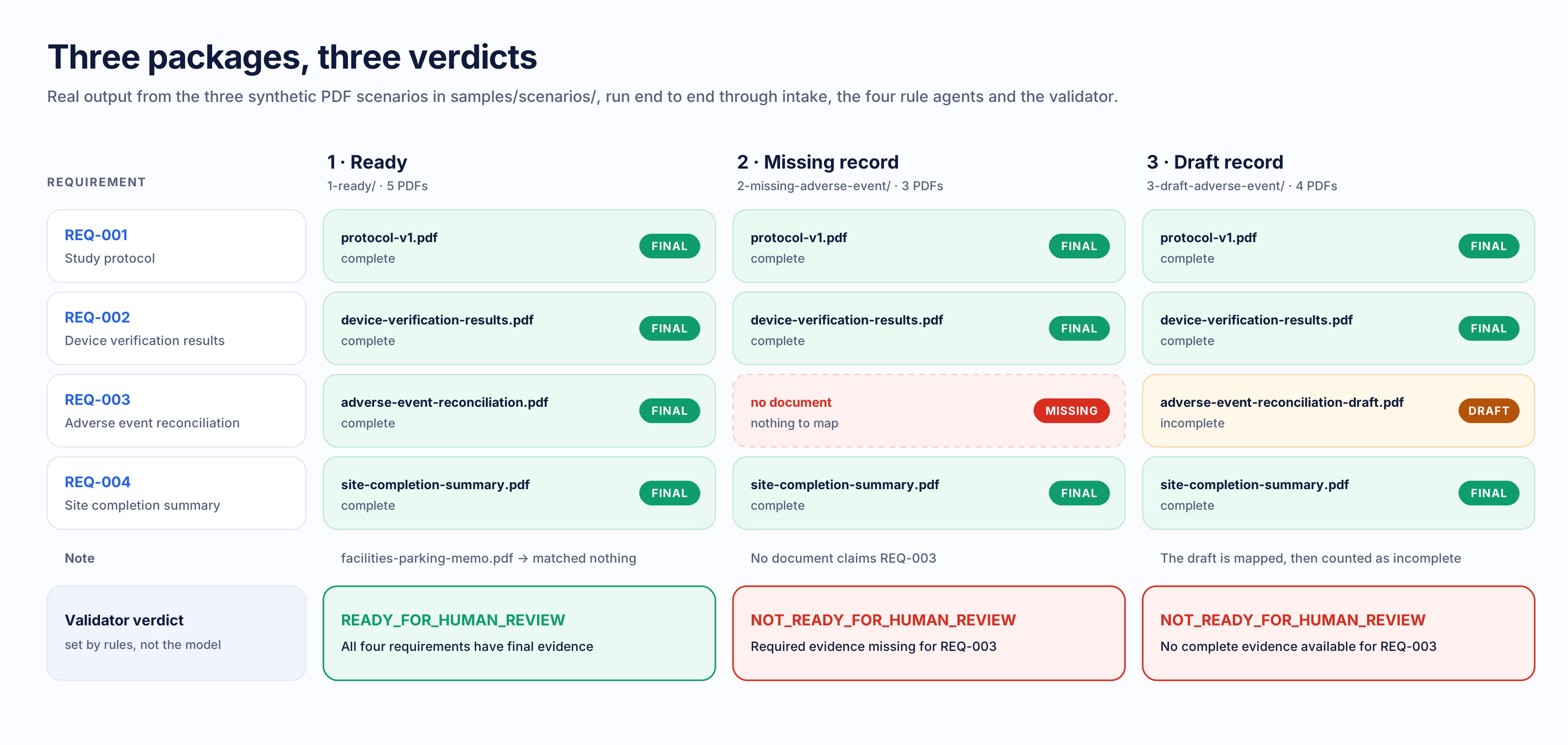
Clinical Evidence Coordinator
A governed multi-agent workflow that checks whether a clinical-study evidence package is complete and traceable. The model proposes, deterministic rules decide, and a human always makes the call.
6 bounded steps1 of 6 calls a model21 tests passing
Read the case study →
 Design stage · Agent architecture
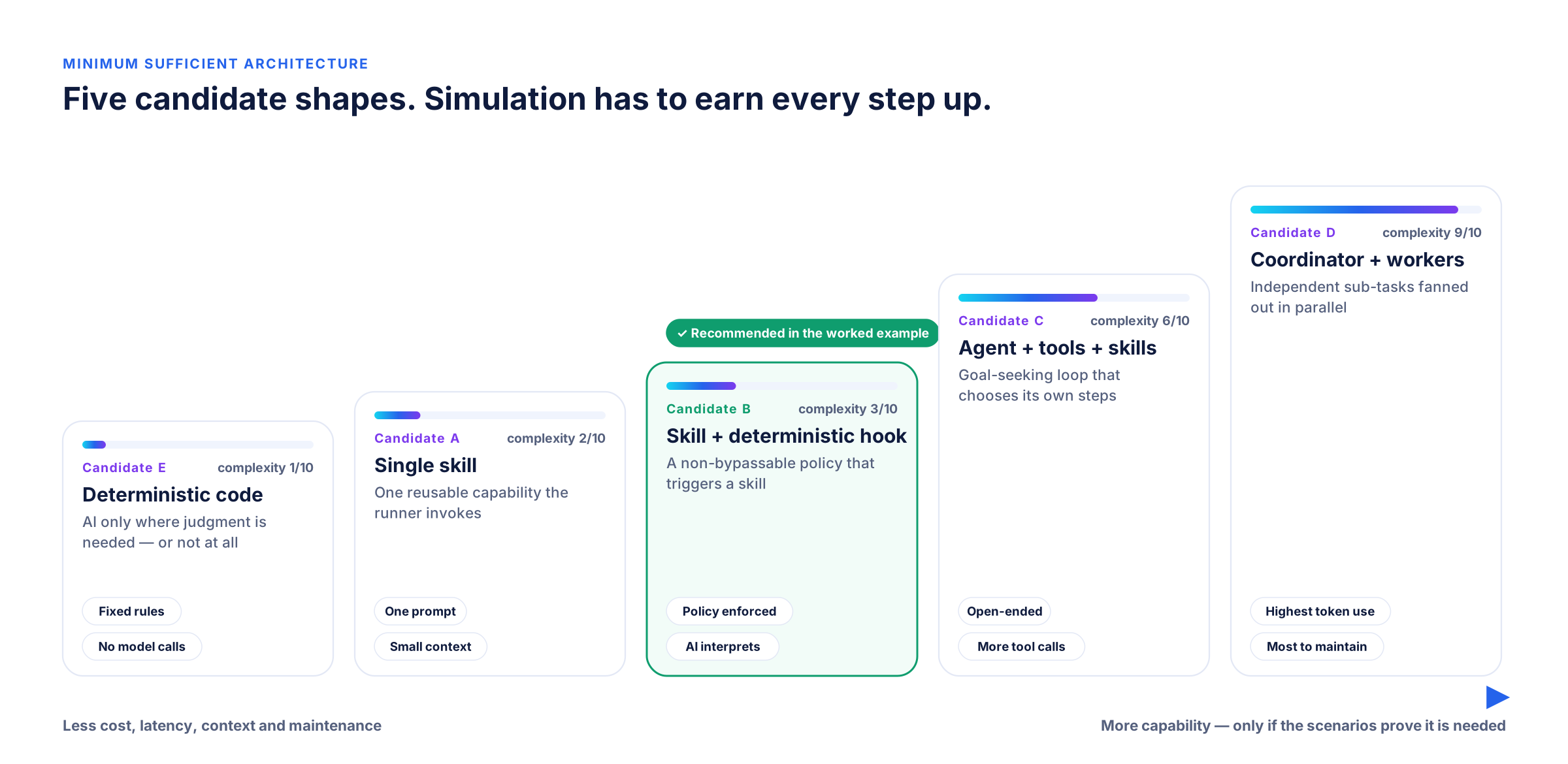
simagent: Intent Simulation Lab
One written intent, five candidate architectures, fifteen adversarial scenarios. The lab simulates them all and recommends the smallest design that reliably does the job.
5 candidate shapes15 scenario types7 capabilities
Read the case study →
 iOS · Native app
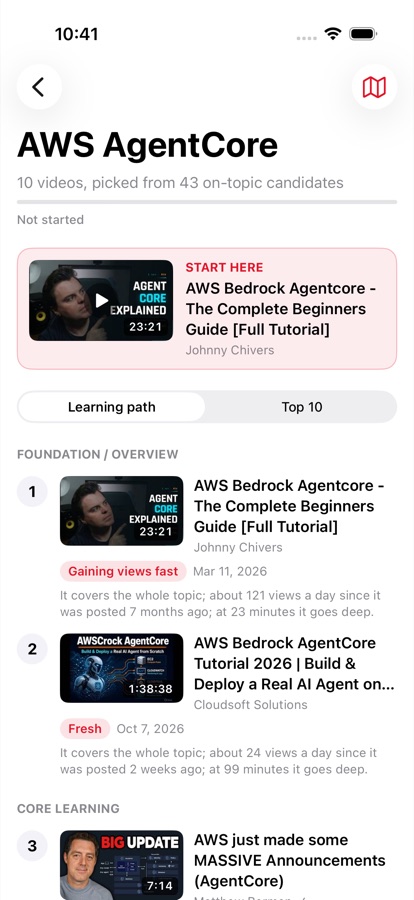
Signal10 for iPhone
A working learning-discovery web app became a tested, native iPhone app built on its existing intelligence, not a second copy of it.
1 day brief to real iPhone18 tested criteria0 server changes
Read the case study →
Intent     what must be true
Context    what it needs
Outputs    what comes back
Success    ✓ the proof
Foundations · The method itself What Is Intent-Driven Engineering? Not a case study: the discipline underneath all of them. State the outcome, the boundaries and the evidence of success, let the best executor do the work, and accept the result on proof. 4 parts to every intent3 forces: declare, reason, verify1 contract for any executor Read the foundations →
AI engineering platform · Claude Code plugin
Team Brain
One plugin gives any repository a shared, versioned team brain: intent, rules, decisions and lessons in git, loaded into every Claude Code session and enforced by hooks.
1 command to install a brain68 tests passing0 servers
Read the case study →
Agentic AI · Regulated workflow
Clinical Evidence Coordinator
A governed multi-agent workflow that checks whether a clinical-study evidence package is complete and traceable. The model proposes, deterministic rules decide, and a human always makes the call.
6 bounded steps1 of 6 calls a model21 tests passing
Read the case study →
Design stage · Agent architecture
simagent: Intent Simulation Lab
One written intent, five candidate architectures, fifteen adversarial scenarios. The lab simulates them all and recommends the smallest design that reliably does the job.
5 candidate shapes15 scenario types7 capabilities
Read the case study →
iOS · Native app
Signal10 for iPhone
A working learning-discovery web app became a tested, native iPhone app built on its existing intelligence, not a second copy of it.
1 day brief to real iPhone18 tested criteria0 server changes
Read the case study →